
Governor Newsom Signs Landmark Legislation on California Native American Day
- Jeremy Bear
- Sep 29, 2025
- 4 min read
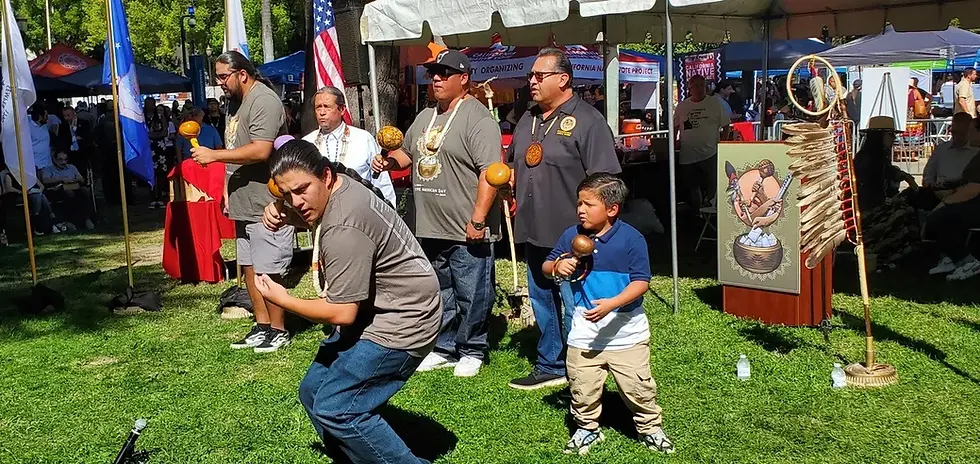
California Governor Gavin Newsom signed three pivotal pieces of legislation focused on Indigenous issues and simultaneously issued an official proclamation recognizing the significance of California Native American Day. The bills, all authored by Assemblymember James C. Ramos (D-San Bernardino), the first and only California Native American elected to the State Legislature since statehood, address core issues including the protection of tribal cultural expression, the long-overdue repatriation of ancestral remains, and the streamlining of essential intertribal financial support.
The trio of new laws aims to specifically prohibit school districts from banning Native students’ right to wear tribal regalia at graduation ceremonies, require the California State University (CSU) system to support the proper reburial of Native American remains on CSU lands, and simplify the process for distributing funding from gaming tribes to fellow tribes with limited or no gaming resources.
Assembly member Ramos characterized the legislation as marking a meaningful and necessary shift in the relationship between the state and its Tribal nations. He offered profound thanks to the Governor for his signature on bills that "represent a turning of the page in how California writes its story with Native American tribes." Ramos drew a stark contrast between this moment and the darkest period of early statehood, noting that just acknowledging a student’s right to wear tribal regalia is "a far cry from early statehood when California’s first governor called for a ‘War of Extermination’ against the tribes.”
The Assembly member also underscored the deep importance of ancestral respect, stating, “We also look forward to working with the CSU system to craft a state policy paving the way to bring the remains of our ancestors a step closer to proper reburial." He emphasized that this fulfills a decades-overdue obligation to repatriate Native American remains and funerary items wrongfully held by CSU campuses, calling it "painful to think of our ancestors’ remains stored in boxes on shelves instead of in the earth." Regarding economic cooperation, he expressed hope that streamlining grants funded by gaming tribes will effectively help fellow tribes without the same resources. Governor Newsom, in his official statement, reinforced the broader goal of promoting access and inclusion for California Native peoples, citing previous administrative efforts to examine and address historical wrongs, including the recent release of the Native American Studies Model Curriculum, developed in close collaboration with California tribes and Native scholars.
AB 1369 – Right to Wear Tribal Regalia at Graduation
This bill directly prohibits school districts from imposing bans on the wearing of tribal regalia during graduation ceremonies, reinforcing students’ fundamental cultural rights and responding directly to ongoing disputes in school districts across the state. Bella Garcia (Clovis Unified School District 2025 graduate) championed the bill, noting that tribes are the most appropriate entities to determine what constitutes appropriate cultural regalia. She stated that American Indian youth deserve to be "recognized, celebrated and uplifted while honoring their ancestors," arguing that graduation, a momentous milestone, should be celebrated, "not marred by misplaced and uninformed bureaucratic objections that prohibit cultural pride." AB 1369 is sponsored by the California Indian Legal Services and the Tule River Indian Tribe, with support from organizations like the ACLU California Action and the California Indian Nations College.
AB 977 – Reburial of Native American Remains on CSU Lands
This critical legislation mandates that the California State University (CSU) system must collaborate with tribes to develop policies that designate university land for the reburial of Native American remains. The measure serves to build upon existing federal and state repatriation laws—NAGPRA (1990) and CalNAGPRA (2001)—which instruct public institutions to return Native remains and funerary objects to their descendant tribes. Samantha Cypret (Mountain Maidu), executive director of the CSU Office of Tribal Relations, affirmed the university’s commitment to addressing the "painful legacy of Native ancestors and cultural items held within our system." She viewed AB 977 as an "important step in fulfilling our responsibility to work in true partnership with Tribal Nations to ensure their ancestors and cultural belongings are laid to rest with dignity and respect." This bill is sponsored by the Santa Rosa Rancheria Tachi Yokuts Tribe and supported by the Morongo Band of Mission Indians and the Society for California Archaeology.
AB 221 – Streamlining Intertribal Grant Funding
AB 221 simplifies the method by which tribes operating gaming facilities can provide crucial financial support to those tribes with minimal or no gaming revenue. The bill modifies the existing Tribal Nation Grant Fund, authorizing equal annual grant disbursements of at least $600,000—or eighty-five percent of the total fund, whichever amount is greater—upon application. These grants can be utilized to fund diverse tribal priorities, including housing, water infrastructure, and vocational programs. AB 221 is sponsored by the Tribal Alliance of Sovereign Indian Nations and the California Nations Indian Gaming Association, with backing from the California Chamber of Commerce and the California Democratic Party Rural Caucus.
Additional Wins in the State Budget
Complementing the new legislation, the 2025–26 state budget secured two further significant financial wins for California tribes. The budget allocates $5 million for a three-year pilot program that will grant tribal law enforcement officers peace officer status. This program is aimed at improving safety on tribal lands and directly addressing the ongoing Missing and Murdered Indigenous People (MMIP) crisis, noting that California currently ranks fifth in the nation for unresolved MMIP cases; the Department of Justice will oversee the project. Furthermore, $10 million was allocated to the California Indian Nations College, supporting its accelerated path to becoming the first fully accredited tribal college in the state, despite California having the largest Native American population in the U.S.